Showing posts with label Events. Show all posts

Thursday, June 25, 2015

Market Basket fan? Tell us about it.

Who has a Market Basket story?
Later this summer we're hosting Grant Welker and Daniel Korschun, authors of the new book We Are Market Basket: The Story of the Unlikely Grassroots Movement That Saved a Beloved Business
The book draws on the stories that both employees and customers love to tell about the store -- and we'd love to hear yours.
Share a story in the comments, or email josh@portersquarebooks.com.

Monday, April 20, 2015

Cokie Roberts on women's history, the Civil War, and "heavy old toads"

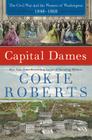
All of us who listen to NPR grow to be familiar with the voices of the anchors and journalists whom we hear regularly, but perhaps none is as well-known as that of Cokie Roberts. She is also no stranger to audiences of ABC News, where she has been broadcasting for more than 25 years. And, as though her career as a journalist weren't impressive enough, she is also an accomplished author, having written, among other things, two books of the history of women in the late 18th century, Founding Mothers and Ladies of Liberty. Now she's written a new work about the women of Washington D.C. during the years before and during the Civil War, called Capital Dames: The Civil War and the Women of Washington, 1848-1868. We're absolutely thrilled that she's coming to be coming to Porter Square Books next week, and will be doing two events with us – a tea at the Charles Hotel from 4 to 5:30, and then an evening at the Regent Theater in Arlington at 7. We hope you'll come to one or both. In preparation for the visit, PSB owner David Sandberg had a few minutes on the phone with Cokie last week, the day before publication day, to talk a little about the book.

DS: You work simultaneously as a journalist who is concerned with what's happening right now, and as a historian who's doing a very different type of research and a very different type of reporting. How do you navigate the back-and-forth?

CR: I actually don’t think it's that different. Even though I can't interview dead people, I can read their mail, which I can't do with living people. But it is the same kind of trying to know them and know what they were thinking. And for that, you read what they've written, both in letters and diaries -- and these women, a lot of them, published as well. And then the newspapers at the time -- and that is really the great serendipity of this book. I did not realize that I would have access to the same news they were reading. Now the entire New York Times archive is online, and there are a couple of excellent websites that give you newspapers from the early 19th century on. And the whole newspaper, where you see the ads and all of that, which are so interesting and so much fun. So I feel like in some ways it's not all that different. The one way that is different that is great is that they can't argue with you.

DS: In terms of the availability of sources: you moved 70 years further in the future with this book. Did you have a lot more available to you?

CR: Yes, absolutely yes. For two reasons: one, there just is more available from that period and as I say, also, these women did do some writing themselves. But the other reason is that because I wrote the earlier books, the university libraries and historical societies and historical homes now are acquainted with my work, and so they are very, very helpful. And digitization is the other huge thing. So it's both a difference in time that I'm researching, but also a difference in time in the time that I'm writing.

DS: So in terms of the former, do you think women made a lot of progress during those 70 years?

CR: Well, they certainly did during the war, which is the thesis of the book. But in the course of those 70 years it was kind of back and forth because the Revolutionary women were out there, and had to be, and then there was kind of this 19th century "be delicate and be at home." They were still politically interesting and interested, but the war certainly turned them into activists in a huge way.

DS: But history, though -- looking who's writing the books. I think most of the books you just mentioned, as well as yourself, Jill Lepore, Megan Marshall -- most of the people writing the history of women in this country are still women. Doris Goodwin writes about men, but most male historians don't write about women. Does that have to change also?

CR: Probably yes. Yes, I do think that has to change. There's an exception in Paul Nagel who wrote about the Adams women, but he didn't really like them.

DS: You must have contemporary historians whom you admire, or whose work you rely on. Who do you think are some of the people writing the best history today?

CR: Well, it depends on the subject, but I certainly relied on both Doris Kearns Goodwin's Team of Rivals and James McPherson's Battle Cry of Freedom for this book. This book is set in Washington and there are also two very good books that are about Washington in the Civil War, one is Ernest Furgurson's Freedom Rising and the other was the classic, which is Margaret Leech's 1941 book Reveille in Washington. But she cites no sources, which makes me crazy. Because now I know so much about it, I can figure out where most of that sourcing is, but that doesn’t do it.

DS: Part of the point of all three of the books, the history books that you've written, is that these are people who are really important to our history and yet their stories don't get told.

DS: How are we doing? How many more books have to be written before you feel that the women's stories are viewed with the same status [as those of the men]?

CR: I actually do think we're doing better. When I wrote Founding Mothers, aside from a couple of good Abigail Adams biographies, there really weren't modern, good biographies of some of these women and since then there's a good Martha Washington, an excellent Dolley Madison, a few on Elizabeth Bonaparte -- there's a lot more happening. But is there forever to go? Sure. It's just unbelievable. We've essentially said that half of the human race doesn’t count in our history. Which means we've distorted our history.

DS: And what about fiction? When you're reading for entertainment and not work.

CR: You know, it's interesting because working on this book -- I'm always late. And I was doing so much research that I didn’t really allow myself to read fiction. The only fiction I read was that fiction -- you know, Capitola and The Hidden Hand. Written by E.D.E.N. Southworth -- her name was something like Emily Danielle whatever, and her byline was E.D.E.N., each with a period after it. Of course the huge, the enormous, enormous, enormous best-selling fiction at the time was Uncle Tom’s Cabin. But, you know, once I finished and I sat down and said Oh, wow, I can actually read some fiction, how much fun, I immediately went to Ellen Gilchrist, because she had some new short stories out and I love her work.

DS: So this book is about Washington, but the last two books dealt a lot more with Boston. What's your favorite Boston story from the colonial period that we might not be familiar with?

CR: Actually, let me tell you one from this period, because I have a lot of unpublished letters of Abigail Brooks Adams -- this is Charles Francis Adams’ wife, so she would be the granddaughter-in-law of Abigail, the daughter-in-law of Louisa. And she is in Washington and he is in Congress, in that very infamous Secession Congress, the 36th Congress, before he went off to London to be the Union ambassador to the Court of St. James. And she writes these hysterically frank letters from Washington home to Henry Adams. She calls Buchanan, the president, a "heavy old toad". And she's furious with Massachusetts Senator Charles Sumner, who's her friend, but she gave him "a piece of my mind -- he expects us all to go out and show ourselves and entertain and work all the time for the cause and he did nothing, not a thing." This is my favorite: "I would advise any young woman who wishes to have an easy quiet life not to marry an Adams." And she also says "The Senate behave like children, and silly ones at that."

DS: Certainly you can tell whose grandchild-in-law she was.

CR: Yes, the strongest men in each generation did marry these very strong women.

DS: One last question -- what are you working on next?

CR: That's like asking someone who's just had triplets when she's going to have her next one. I'm not going to do more Civil War. I did not get this book in until February, so I am still suffering the after-effects of getting up at three o'clock in the morning and writing for fifteen hours straight, to make it into the stores by the end of the sesquicentennial of the war.

DS: OK, so then we'll let you go back to your day job.

CR: Thank you. There is a presidential election coming up. You might have noticed that.

DS: Good luck with the launch, and we can't wait to see you.

CR: I'm so looking forward to that.

Tuesday, April 14, 2015

What is Accessibility in Literature?

On April 17th we'll be hosting a reading and discussion with contributors to the anthology The Force of What’s Possible: Writers on Accessibility & the Avant-Garde and I can't be more excited. For a bookstore, often the last link in the chain that connects a writer to a reader, we are professionally concerned specifically with the term "accessibility" in the title. As we try to match readers with books, we always have to have some idea of "accessibility" in the back of our minds. We have to surmise what a reader will actually enjoy. Many readers do enjoy being intellectually challenged by books often considered "inaccessible" and we do our best to match that. So ahead of the event, I asked the editors and the presenters: "What is accessibility in literature?" Here's the first response from anthology editors Lilly Hoang (LH) and Joshua Marie Wilkinson (JMW).

LH: So Josh Cook has asked us to examine the role of accessibility in literature. We began this project to question and interrogate exactly that. Nearly 100 essays and an anthology later, is there any take-away you can offer?

JMW: Well, for me it's about not ventriloquizing market capitalism in order to make sense of art. There's a book that was really important to me called Just Being Difficult? that was edited by Jonathan Culler. When I want to see what literature can do, I turn to Spivak's and Judith Butler's and Michael Warner's pieces in that collection. Warner is writing about 1984 in his essay called "Styles of Intellectual Publics" when he says,
For whom does one write or speak? Where is one's public? These questions can never be answered in advance since language addressed to a public must circulate among strangers; neither can they be dismissed, although the answers necessarily remain mostly implicit. One does not stand nakedly to address humanity.

I love Warner's response as well as his reading of Orwell. It's never the innocent question it’s cloaked as, asking somebody or something to become "accessible" so that a public can "get it." The question itself implies something dangerous about whatever the "public" or "common reader" is concocted to become. Poetry can disrupt normative reading practices and form new, strange, sometimes lovely, and maybe harrowing modes of feeling and thinking. That's what I want from art. What are you after now, Lily? What are you obsessing over?

LH: I was listening to Eugène Ysaÿe yesterday and my roommate came in and I said, Isn't it amazing that a person—a real person—is making all that music?, and then I explained that I was listening to the gala from the Henri Wisniaski Violin Competition and shit dude, they probably practice like more than eight hours a day, and he said, Can you believe people still play that stuff? It just seems so, you know, like old. Like who still plays stuff like that? By play he doesn't mean listen. He isn't that big of an asshole to insult me directly. But regardless, my roommate is a filmmaker and I am a writer and he is new and I am old. I am like the classical musician who insists on practicing and performing Eugène Ysaÿe and who the fuck cares anymore? Well, I do. I am still listening. And culture. Culture needs people for musicians to continue to play Eugène Ysaÿe. Or maybe I mean high art. I don’t know what I mean.

Eugène Ysaÿe is accessible to me. I used to be a violinist—please don’t call me a fiddler, it's insulting, not to fiddlers but to the instrument itself. Form. When I changed private teachers in high school, he wouldn't let me pick up my violin for three months because I didn't know how to properly hold my bow. I mean: I was hard core about it. So Eugène Ysaÿe is accessible to me, but to my roommate, "classical" music is a remnant of a time so long ago it may as well be age of Egyptians.

Furthermore, my roommate doesn't read.

I'm not picking on him. Rather, I'm using him as a case study. He is not your average American. He's into arts—if you choose to call making horror films art, which you may or may not, it really doesn't matter to me. My roommate writes scripts and directs films, he edits them. And he doesn't read. He doesn't listen to classical music. He isn't going to art openings. I'm sure he doesn’t give a flying fuck about architecture or what terms are the most politically correct. What's my point? Here we are, worrying and defining accessibility, which is so important to us in our world, but who outside of us cares? This makes me sad. I didn't answer your question at all, but I'm really talking about audience. More people care about Eugène Ysaÿe than all of my books and anthologies combined—and probably yours added to mine, too.

Yes, I care about audience. But I wouldn't sacrifice my devotion to the concept and the sentence to gain audience. Besides which: what kind of audience do I really think I'd gain if my writing were more accessible? I pose this question to you too.

JMW: I wonder about audience. I'm suspicious about a work that tries to imagine its audience too precisely in advance. Then again, maybe it's impossible not to think about audience in some way. But to try to imagine what an audience—a reader, a listener, a participant in meaning—is capable of thinking and of feeling seems to me like a failure. Perhaps I want to not know what's possible for a work to bring up in the audience—that the yet-to-come of whatever response (however intelligent or indifferent, capacious or unsettling) isn't for the writer to try to determine prior to making any work public. Yet, I hope for an audience more various and unlike me to encounter it. I hope for a smarter audience who will think thoughts beyond my ken and feel, beyond my influences and understanding, my emotional registers or political imagination. Love to hear you answer your same question, Lily…

LH: I know quite a few "experimental" fiction writers who have tried and tried to write their "sell-out" novel, the one that will launch them into more mainstream literary fiction, and they always fail. I think we can only write what we write. Like: my brain thinks in little pieces, so I write modular or flash. Whereas I am able to write a longer, more traditional novel, it’s exhausting—and probably unpublishable.

That being said, I also think that my own perception about how accessible my books are is skewed: I suffer from book dysmorphic disorder. We just got back from AWP, where this anthology got so much sugar, but also, a lot of random people—youngins too—gushed their adoration. (I know for a fact you had the same "problem.") This tells me that no matter what I think, my writing is accessible, and maybe the goal isn't to have a wider audience, maybe it’s just to have a better audience.

To participate in this discussion with Lily and the other presenters please join us on Friday April 17th at 7PM

Wednesday, February 25, 2015

When the hot-shot debut author sits in the next chair

I've set up events for dozens of authors over the past year -- Rick Riordan, Amanda Palmer, Cary Elwes, George Clinton, Bobby Orr -- but next week will be a new one: we're launching An Exaggerated Murder by Josh Cook, a debut novelist who also happens to occupy the desk next to mine here in the PSB office. (There are a few minor differences. For instance, Bobby Orr was not looking over my shoulder when I pondered how many copies to order.)

Josh and I work well together, but we don't exactly have similar literary tastes. (You may have seen copies of The Martian around the store labeled "the only 2014 book Sarah and Josh both liked." It's not much of an exaggeration.) James Joyce, Laurie R. King. Oulipo, longform journalism. You get the idea.

Which is why I am so glad I can tell you that An Exaggerated Murder gets to claim that title for 2015. It's fantastic. You will love it. And if you start reading every clever bit out loud (trust me, it's tempting) you're going to get hoarse.

The literary world has been reaching the same conclusion: The first review, in Kirkus, was a starred one. It's on the March Indie Next List.

Book launches are always special events for the authors, but this time we're all excited. Josh has been part of Porter Square Books since the beginning, and we're looking forward to celebrating with him. Everyone's been taking part, designing posters, creating displays, making plans for Tuesday. (Though I did veto the suggestion of an all-you-can-drink vodka bar. Thematically appropriate, but no.)

I hope you'll join us for this one.

Author Breakfast Series at the Charles Hotel


What is more fun than spending a morning having breakfast at the Charles Hotel with a famous author and hobnobbing about books, writing, and life? Last year we started this breakfast series in partnership with the Charles (at Henrietta’s Table) and enjoyed the company of Ann Patchett, Jared Diamond, and Peter Yarrow and Noel (Paul) Stookey, of Peter, Paul & Mary. Ask anyone who got to attend those events: they were amazing -- a chance to converse in an intimate setting with brilliant, wonderful, insightful people who happen to have written books that we love. For 2015 we’re kicking off the series with two terrific authors from Maine, Tracy Kidder (March 13) and Lily King (April 8).

Tracy Kidder first shot to prominence more than 30 years ago with Soul of a New Machine, a penetrating portrayal of the race to develop a new generation of computer at Data General Corporation in the 1970s. The book won him a Pulitzer Prize and a National Book Award and put him on the map as one of our most accomplished and literate non-fiction authors. You may be familiar with House, his book about a couple having their house built; Old Friends, a portrayal of two older men in a nursing home; Mountains Beyond Mountains, a magnificent biography of physician/anthropologist Paul Farmer; or Strength in What Remains, about an ordinary man who arrives in the US and tries to make a life for himself after surviving the Rwandan genocide. A couple of years ago Tracy went in a new direction, writing a book about writing, Good Prose: The Art of Nonfiction. It proudly sits on our shelves in section 555 (“On Writing”) alongside such classics as Anne Lamott’s Bird by Bird and Stephen King’s On Writing.

Tracy doesn’t have a new book out -- he’s just coming to schmooze. Come to talk with him about your favorite of his books, or pick up one you haven’t read yet and come with questions.

Lily King published three novels between 1999 and 2010, and they were lauded with accolades such as a New York Times Notable Book award, Publishers Weekly Top Ten Book of the Year, New York Times Editors Choice, Publishers Weekly Best Novel of the Year, the New England Book Award for Fiction and the Maine Fiction Award. Even with all that, she might still have been unknown to you until last year and the publication of Euphoria. This, her fourth novel, was the winner of the 2014 New England Book Award for Fiction and the 2014 Kirkus Prize for Fiction, one of the New York Times Book Review's 10 Best Books, TIME's Top 10 Fiction Books, Oprah’s 15 Must-Reads, NPR Best Books of 2014 and (cross your fingers -- winner to be announced next month) finalist for the National Book Critics Circle award. And that’s not even close to a complete list. Need we say more?

Back in April of last year, some of us were fortunate enough to be invited to a pre-publication dinner with Lily and read an advance copy of the book. She is a delight. We hatched a plot of getting Lily to Cambridge (where she lived before moving to Maine a bunch of years ago) and decided to do it in conjunction with the launch of the Euphoria paperback. So here’s your big chance. You will thank us.

Both of these events are limited in attendance, so sign up soon while there’s still space. (Tickets: Tracy Kidder and Lily King.) We have plenty of books in the bookstore, but we will also have both authors’ titles on sale at the breakfasts themselves. We hope we’ll see you there.

David

Thursday, January 22, 2015

Winter and Spring Events for Young Readers!


We’d like to say that PSB has a super sophisticated big-data driven method for scheduling author events, but really, we just respond to publishers and request the authors we like or think would do a great job. Sometimes patterns emerge in that somewhat chaotic process and this winter and early spring a pattern of fantastic events for young readers has emerged. So here’s what all you young readers and fans of writing for young readers can look forward to.

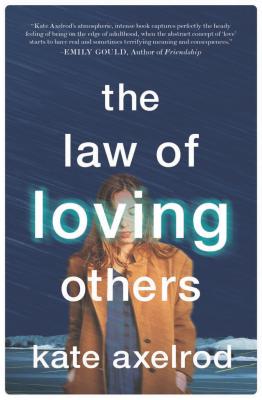
Friday, January 23, 7 pm YA: Kate Axelrod & Wendy Wunder, The Law of Loving Others and The Museum of Intangible Things

Two local novelists share their newest books about family, growing up, and making sense of the world.

The Law of Loving OthersKate Axelrod was born and raised in New York City. She has a B.A. in Creative Writing from Oberlin College and a Masters in Social Work from Columbia University. She has written for Nerve.com, Salon and various other publications. She lives in Brooklyn and works as an advocate in the criminal justice system. This is her first novel. Margo Rabb, author of Cures for Heartbreak, says “The Law of Loving Others is a poignant, powerful, and insightful novel about love, loss, and growing up. Kate Axelrod has written a wise and wonderful debut.”

Wendy Wunder is the author of The Probability of Miracles, which was called "beautiful" in a starred review from Kirkus and a "graceful balance of comedy and tragedy" by Publishers Weekly. When she's not writing or spending time with her family, she teaches yoga in Boston. Alexandra Coutts, author of Tumble and Fall says this “The Museum of Intangible Things is the best kind of joyride: exhilarating and hilarious and full of heart. A must-read for anyone who has ever had - or longed for - a true best friend.”


Perfect for: Fans of Sarah Dessen, Deb Caletti, Stephanie Perkins, and contemporary YA.

Thursday, January 29, 7 pm PICTURE BOOK: Mary Lundquist, Cat & Bunny 

Two costumed children star in this debut picture book from a local artist.

From the heartwarming text to the adorable illustrations of little kids dressed as animals, there's so much to love about Mary Lundquist's debut picture book, Cat & Bunny. Cat and Bunny. Bunny and Cat. It's always been just the two of them -- daydreaming, having adventures, playing their special game. Until the day someone else asks, "Can I play?" Mary Lundquist captures all the charm and magic of first friendship in her winning debut picture book.

Mary Lundquist grew up in Massachusetts and is the youngest of seven children. She graduated with a BFA from Mass College of Art and Design in Boston in 2008 and moved with her husband to England for three years. They now live with their son Calvin in Los Angeles where they enjoy the endless sunshine and visit the beach almost every week.

Perfect for: Preschool and early elementary readers—and anyone who likes dressing up.

Monday, February 9, 7 pm MG: N. Griffin, Smashie McPerter and the Mystery of Room 11

When the classroom hamster disappears, Smashie is on the case! (Even though she’s not a fan of hamster feet.)

N. Griffin is the author of The Whole Stupid Way We Are, for which she was named one of Publishers Weekly’s Flying Start Authors of 2013. She received her MFA from the Vermont College of Fine Arts and lives outside Boston. Publisher’s Weekly says this, “Griffin uses humor to tackle issues most children grapple with at some point, and Hindley’s loose b&w sketches play up the madcap energy at Rebecca Lee Crumpler Elementary School. Smashie’s ... positive energy and determination are impressive. Readers will be learning and laughing heartily as Smashie dons her "Investigator Suit" and uses "thinking power" to try to prove herself.”

Perfect for: Elementary school readers who enjoy The World According to Humphrey and Sideways Stories from Wayside School.

Friday, February 13, 7 pm YA: Gareth Hinds, Macbeth

Our favorite graphic novel creator is back with his take on the Scottish play.

Shakespeare's classic story of dark ambitions, madness, and murder springs to life in a masterful new graphic novel by Gareth Hinds.

Set against the moody backdrop of eleventh-century Scotland, Gareth Hinds’s captivating, richly illustrated interpretation takes readers into the claustrophobic mind of a man driven mad by ambition. An evil seed takes root in the mind of Macbeth, a general in the king’s army, when three witches tell him he will one day be king. At the urging of his wife, he resolves to take the throne by the most direct path: a dagger in the heart of King Duncan. But "blood will have blood," and when others grow suspicious of his sudden rise to power, is Macbeth prepared to commit more murders to keep the crown?

Gareth Hinds is the acclaimed creator of the graphic novels The Odyssey, Beowulf, Romeo and Juliet, The Merchant of Venice, and King Lear. He lives near Washington, D.C.

Perfect for: Shakespeareans, comics fans, anyone who has to read the play for high school English.


Tuesday, February 17, 7 pm YA: MarcyKate Connolly, Monstrous

A YA novel from a local author who turns fairy tales into something more.

The city of Bryre suffers under the magic of an evil wizard. Because of his curse, girls sicken and disappear without a trace, and Bryre's inhabitants live in fear. No one is allowed outside after dark. Yet night is the only time that Kymera can enter this dangerous city, for she must not be seen by humans. Her father says they would not understand her wings, the bolts in her neck, or her spiky tail—they would kill her. They would not understand that she was created for a purpose: to rescue the girls of Bryre. Despite her caution, a boy named Ren sees Kym and begins to leave a perfect red rose for her every evening. As they become friends, Kym learns that Ren knows about the missing girls, the wizard, and the evil magic that haunts Bryre. And what he knows will change Kym's life. Reminiscent of Frankenstein and the tales of the Brothers Grimm, this debut novel by MarcyKate Connolly stands out as a compelling, original story that has the feel of a classic.

MarcyKate Connolly is an author and arts administrator living in New England with her husband and pugs.

Perfect for: Upper-elementary and middle school readers, fans of Shannon Hale’s Princess Academy series, and monster aficionados.

Friday, February 27, 7pm PICTURE BOOK: Matt Tavares, Growing Up Pedro

A new picture book biography just in time to celebrate Pedro Martinez’s election to the Hall of Fame!

Before Pedro Martínez pitched the Red Sox to a World Series championship, before he was named to the All-Star team eight times, before he won the Cy Young three times, he was a kid from a place called Manoguayabo in the Dominican Republic. Pedro loved baseball more than anything, and his older brother Ramon was the best pitcher he’d ever seen. He’d dream of the day he and his brother could play together in the major leagues—and here, Matt Tavares tells the story of how that dream came true. In a fitting homage to a modern day baseball star, the acclaimed author-illustrator examines both Pedro Martínez’s improbable rise to the top of his game and the power that comes from the deep bond between brothers.

Matt Tavares is the author-illustrator of Henry Aaron's Dream, There Goes Ted Williams, and Becoming Babe Ruth as well as Zachary's Ball, Oliver’s Game, and Mudball. He is also the illustrator of Doreen Rappaport's Lady Liberty and Alicia Potter’s Jubilee!, among others. Matt Tavares lives in Ogunquit, Maine.

Perfect for: Baseball fans of all ages who enjoy great illustrations.


Saturday, March 14, 7 pm YA/BEST OF BOTH WORLDS: Camille DeAngelis, Bones & All 

A girl with a tendency to devour people goes looking for the father she never knew.

Maren Yearly is a young woman who wants the same things we all do. She wants to be someone people admire and respect. She wants to be loved. But her secret, shameful needs have forced her into exile. She hates herself for the bad thing she does, for what it’s done to her family and her sense of identity; for how it dictates her place in the world and how people see her--how they judge her. She didn’t choose to be this way.

Because Maren Yearly doesn’t just break hearts, she devours them. Ever since her mother found Penny Wilson’s eardrum in her mouth when Maren was just two years old, she knew life would never be normal for either of them. Love may come in many shapes and sizes, but for Maren, it always ends the same—with her hiding the evidence and her mother packing up the car.

Camille DeAngelis is the author of the novels Mary Modern and Petty Magic and a first-edition guidebook, Moon Ireland. A graduate of NYU and the National University of Ireland, Galway, Camille currently lives in Boston.

Perfect for: YA paranormal fans who like Laini Taylor, Lauren Oliver, and Alaya Dawn Johnson.

Friday, March 27, 7 pm MG: Jeanne Birdsall, The Penderwicks in Spring

The Penderwick sisters return for the fourth book in the series with Batty, now in fifth grade, keeping the family in line. (Really, we can’t say enough about this staff favorite!)

Filled with all the heart, hilarity, and charm that has come to define this beloved clan, The Penderwicks in Spring is about fun and family and friends (and dogs), and what happens when you bring what's hidden into the bright light of the spring sun.

When Jeanne Birdsall was young, she promised herself she’d be a writer someday—so that she could write books for children to discover and enjoy, just as she did at her local library. She is the author of The Penderwicks, which won the National Book Award for Young People’s Literature, The Penderwicks on Gardam Street, and The Penderwicks at Point Mouette.

Perfect for: Elementary and middle school readers who enjoy the classics, from All-of-a-Kind Family to The Moffats.

Sunday March 29, 5 pm PICTURE BOOK: Mariam Gates, Good Night Yoga

Try out some bedtime yoga exercises and learn how to make the end of your day relaxing.

For kids in early to middle childhood -- and the lucky people who have to get them to bed -- Good Night Yoga is both a bedtime story and a series of simple poses for following the natural world as it comes to rest at day's end.

Join us for combination reading and demonstration of yoga at its most soothing.

Mariam Gates is the founder of the Kid Power Yoga Program. Although she has left us for the West Coast, she spent many years teaching in Boston, and served as the director of Citizen Schools.

Perfect for: Preschool and elementary children (and their parents), from yoga novices to the pros.


Thursday, October 9, 2014

Tim Riley on The Goduncle of Funk

Affectionately known as the "Goduncle" of funk, just a rung beneath James Brown's godfather, George Clinton's career as a black rock innovator spans the past fifty years with three number 1 singles and three platinum albums.

Clinton's work mirrors the story of black pop from doo-wop through Motown pop and soul to dance music, and gained iconoclastic stature through extended guitar solos, cartoonish concept albums, and exuberant stage shows with outlandish costumes.

Most of his work revolves around two distinct groups, Parliament and Funkadelic, who appeared as the P-Funk All-Stars after 1981. Well-known albums include "Free Your Mind And Your Ass Will Follow," and "The Clones of Dr. Funkenstein."

Key role models for Clinton include Sly Stone and Jimi Hendrix, but he presided over his many casts of musicians as a mentor and svengali, spawning solo careers for bassist Bootsy Collins and keyboardist Bernie Worrell. His work can be palpably felt in the music of Prince, and rappers have sampled his recordings almost as much as James Brown's. He was inducted into the Rock'n'Roll Hall of Fame in 1997. His new memoir, Brothas Be, Yo Like George, Ain't That Funkin' Kinda Hard on You? recounts his zig-zag career with New Yorker writer Ben Greenman.

See George Clinton in conversation with Tim Riley on October 25. More info and ticket details here.

Tim Riley is a professor at Emerson College and author of several books, including Lennon: Man, Myth, Music.

Thursday, September 11, 2014

Introducing David's Dinners

I've found that often publishers invite me to dinners with authors I've never heard of, and I end up meeting some super interesting people and, usually, reading and liking their books. And as often as not, they're books I wouldn't otherwise have picked up. I’ve gotten to meet a number of authors this way and I’ve had great conversations that have really informed and enriched my reading of their books. I’ll often be at the counter when someone comes to buy a book whose author I’ve met, and I find I can tell the customer so much more about the book and the experience of reading it because of that special contact I’ve had with the writer.  

This got me to thinking: we should do something to make opportunities like this available to our customers as well. After all, authors go on tours, many of them come to Porter Square – and they too love the idea of connecting with readers, of schmoozing in a context less formal and structured than a reading at the store, and of enjoying a good meal while talking about their books. And our readers love to come to events – how much more would they love to come to dinner? We’re lucky enough to have a lovely restaurant across the street, Christopher’s, and so I came up with the idea of author dinners as a way of introducing our customers to less-than-famous writers. (Not that this was really my idea; there are certainly other bookstores that have done author dinners, but it’s a first for us.) If it works as planned, it will become a regular way of introducing our customers to authors they might not have otherwise read, and who we know (through having met them before) are particularly fascinating or cool people who have written particularly fascinating or cool books. We decided to call them David’s Dinners, mainly because we couldn’t come up with anything cleverer and we love alliteration.

One author I met in the late spring at the BEA conference was Laird Hunt, author of the new book Neverhome. A couple of weeks later we went to a dinner with him and had a grand time. As I always do when I’m invited to these author dinners, I read the book. It really struck me; I’m a sucker for narrative voice, and Laird was a man writing as a woman who was pretending to be a man. He rooted the book in real history – there were many real-life Ash Thompsons in the 1860s – but added a clear and direct, unsentimental but touching, compelling narrative style. I was so taken with the novel I chose it as my staff pick for this month. I then found out Laird was going to be in Boston in the latter part of September and I was able to arrange for him to spend an evening in Cambridge. Voila, the kickoff event for our dinner series. Sunday evening the 21st. He’s interesting and personable, the book’s a terrific read – and to top it off, it’s on the Indie Next list for September so it’s even 20% off (only $20.80, hardcover). We worked out an arrangement with Christopher’s, so we have the room upstairs all to ourselves and they’ve given us a menu with choice of appetizer, choice of entrée and a beer or glass of wine, for only $36 including tax and tip. You don't have to buy the book, but if you do (either in advance or at the event), Laird will of course inscribe it for you.

I really want people to come to this – I’m hoping to make the series a success so we can have a regular way of introducing our customers to some of our authors in a way that can complement our normal schedule of in-store readings. So I hope you’ll sign up. I guarantee you’ll have a delightful, literary, insightful, and gastronomically satisfying experience – and you can say you were there when it all started.  Here’s the link.

Thursday, August 28, 2014

Peter May's North American debut

I will go right ahead and say from the outset that I do not generally read detective novels, or crime novels, or mystery novels, or Section 940 (as we call them in the bookstore). I don't dislike them, they just don't often make it to the top of my list. But a dear friend, and someone whose taste I trust in books, talked to me last month and said "I just finished the best book I've read in two years. You have to read it. The writer's name is Peter May and the book is The Blackhouse." I nodded politely because I knew I had no plans to read the book (there was just too much on my pile right then - galleys of the new Ian McEwan novel and Maureen Corrigan's book about Gatsby, and Josh's staff pick for this month, The Most Dangerous Book, and all sorts of other stuff). And that was before I even knew that it was a detective/mystery novel, which made it even less likely that I'd read it. But then I mentioned it to my wife, Dina, and she said "Peter May - he's coming to the bookstore in September, I think." Well, sure enough, he was. And then the stars aligned further because in the back of the store I found galley copies not just of The Blackhouse, which came out in the US a couple of years ago, but of The Lewis Man, the new book for which Mr. May is coming to visit us next week. Score. (These two books are the first two of a trilogy - the third, The Chess Men, is out in Britain but not yet here.) Then I started reading about him and the books and how people have gone nutso over them in the UK and Europe (France especially), and I found out that his appearance at Porter Square will be his first in the US for this book (I believe he was in the states briefly in 2013 when he won a number of awards for The Blackhouse). The signs all added up to the fact that it looked like I was going to be reading these books.

So I read The Blackhouse. Wow. This is a phenomenal piece of writing. The story takes place on the Isle of Lewis, in the Outer Hebrides in Scotland (May is from Glasgow). Fin MacLeod is an Edinburgh detective, originally from Lewis, who is called back to the town he grew up in, and which he had left years ago, to investigate a murder that appears to have parallels to a case he had handled in Edinburgh. The novel alternates chapters between the third person narrative of the present - Fin's investigation - and a first person narrative of the child Fin growing up with many of the characters who are still around and are now the primary figures in the investigation. May's descriptions of place are magnificent and evocative - Lewis seems indeed to be God's country, forsaken and bleak and harsh, and he writes as well about weather as he does about landscape. His characters, and his dialect, are brilliant.

So that's enough about Blackhouse - just go read it. (We have plenty of copies at the store.) Now I'm halfway through Lewis Man and basically all the things I said in the last paragraph about Blackhouse are true here as well - Fin is again the central character, investigating a murder in Lewis, alternating voices between a first and a third person narrator. And also, as before, the past not only informs Fin's memory and psyche, but becomes inextricably woven into the events of the present, and is part of the mystery (and, I can predict, its solution). Many characters return along with Fin, and the physical setting is again a crucial and mesmerizing part of the story. But don't worry, this is not just a rewrite of the first book.  Far from it - and in fact so far I like it even better.  This is a you-need-to-go-to-sleep-but-you-can't-put-it-down-and-you-stay-up-til-3-in-the-morning book. You are naturally curious about solving the mystery, but that is only a fraction of the delight of the experience of reading the novel. I'm hooked, and am waiting for Chess Men to finish the trilogy.

I predict you will hear a lot about Peter May in years to come. And you will be able to say that you saw him his first time here, when he landed in America with his new book. Even if you've only just started The Blackhouse, and even if you haven't (yet), please come and meet Mr. May on Tuesday the 3rd. You'll thank me.

Friday, August 22, 2014

The Booker Long-list at PSB

The Man Booker Prize might be the most prestigious book award in the English language, making the revelation of the long and short lists of the finalists a major event in the book world. This year’s announcement of the long list drew particular attention because 2014 is the first year in which Americans are eligible to win the prize. As interesting as it is to see four Americans on the list (especially Joshua Ferris who read at PSB for the paperback release of his National Book Award finalist novel Then We Came to the End) the Americans didn’t catch our eye; the two finalists who will be reading with Porter Square Books in September did.

The Narrow Road to the Deep North by Richard Flanagan, September 5.

The Guardian calls Flanagan’s long-listed book “A masterpiece . . . A symphony of tenderness and love, a moving and powerful story that captures the weight and breadth of a life . . . A high point in an already distinguished career.” The Australian says, “Nothing could have prepared us for this immense achievement . . . The Narrow Road to the Deep North is beyond comparison . . . Intensely moving.” And from The Observer: “A novel of extraordinary power, deftly told and hugely affecting. A classic in the making . . . Masterful.”

In the despair of a Japanese POW camp on the Thai-Burma Death Railway in 1943, Australian surgeon Dorrigo Evans is haunted by his love affair with his uncle's young wife two years earlier. His life is a daily struggle to save the men under his command from starvation, from cholera, from pitiless beatings - until he receives a letter that will change him forever. Moving deftly from the POW camp to contemporary Australia, from the experiences of Dorrigo and his comrades to those of the Japanese guards, this savagely beautiful novel tells a story of death, love, and family; exploring the many forms of good and evil, war and truth, guilt and transcendence, as one man comes of age, prospers, only to discover all that he has lost.

Richard Flanagan is the author of five previous novels, including the widely acclaimed Gould’s Book of Fish, which have received numerous honors and have been published in twenty-six countries. He lives in Tasmania.

The Bone Clocks by David Mitchell, September 18

Joe Hill, who will be in conversation with David at our event says “The Bone Clocks is a stunning work of invention, incident, and character. The levels of awesome in this book are off the charts,” and Publisher’s Weekly wonders if The Bone Clocks is “the most ambitious novel ever written, or just the most Mitchell-esque?” while calling it “a thing of beauty.”

Following a scalding row with her mother, fifteen-year-old Holly Sykes slams the door on her old life. But Holly is no typical teenage runaway: A sensitive child once contacted by voices she knew only as "the radio people", Holly is a lightning rod for psychic phenomena. Now, as she wanders deeper into the English countryside, visions and coincidences reorder her reality until they assume the aura of a nightmare brought to life. For Holly has caught the attention of a cabal of dangerous mystics—and their enemies. But her lost weekend is merely the prelude to a shocking disappearance that leaves her family irrevocably scarred. This unsolved mystery will echo through every decade of Holly's life, affecting all the people Holly loves—even the ones who are not yet born.

A Cambridge scholarship boy grooming himself for wealth and influence, a conflicted father who feels alive only while reporting from occupied Iraq, a middle-aged writer mourning his exile from the bestseller list—all have a part to play in this surreal, invisible war on the margins of our world. From the medieval Swiss Alps to the nineteenth-century Australian bush, from a hotel in Shanghai to a Manhattan townhouse in the near future, their stories come together in moments of everyday grace and extraordinary wonder.

Rich with character and realms of possibility, The Bone Clocks is a kaleidoscopic novel that begs to be taken apart and put back together by a writer The Washington Post calls “the novelist who’s been showing us the future of fiction.”

And while we’re talking about prizes, Eimear McBride, winner of the most recent Bailey’s Prize for her first novel A Girl is a Half-Formed Thing, will be in conversation with Madeline Miller, winner of the 2012 Orange Prize (the original name for the Bailey’s Prize) on October 29th, which should also be an amazing event.

Tuesday, May 13, 2014

Joe McKendry and Matt Tavares on Storytime

On Saturday May 17th, we will be hosting Indies First Storytime with Jef Czekaj, Matt Tavares, Joe McKendry, and Scott Magoon. Indies First Storytime is lead by national ambassador for young people’s literature and multi-award winning author Kate DiCamillo, to celebrate the power of reading to children and the unique role independent bookstores play in getting good books into the hands of readers. Read Kate’s letter here. In honor of the event, we asked the authors to share their thoughts on the importance of storytime. Here’s what Joe and Matt had to say.

Joe McKendry: Even before I had kids I had started a pretty good collection of children's books that served as inspiration for the books I was aspiring to create. Virginia Lee Burton's The Little House was the main inspiration for my book One Times Square. Burton's book chronicles the story of a house that remains unchanged even as the landscape changes around it. I began to see the subject of my book One Times Square (where the famed New Year's ball drops atop its roof each year) as The Little House. When it was built in 1904 it was the tallest building around, but over time it became overrun and dwarfed by the surrounding buildings. So even though what I ended up producing was a much different book, both in illustration style and subject matter, my guide was a simple but powerful children's book.

Matt Tavares: When I was a kid, story time was always a highlight of my day, and now that I'm a parent (and a children's book author), it still is. Whether it's reading with my daughters at the end of a long day, or reading to a room full of kids, there is something so special about taking the time to get lost in a story together.

Monday, May 12, 2014

David Downing on Spy Fiction

David Downing will be reading from his latest book Jack of Spies on May 14th at 7pm. He is the author of The Station series, set in WWII Berlin, featuring the spy John Russell. With Jack of Spies he turns the clock back to the eve of WWI and the early days of British Espionage. So early, in fact, that Scottish car salesman Jack McColl, is able to moonlight for His Majesty’s Navy. Lots of readers are looking for the next Le Carre or Furst, so we asked David to share some of his thoughts on spy novels. Here’s what he had to share.
Some thoughts on ‘spy novels’

Consulting a website which listed ‘the best 690 spy novels ever written’I was surprised to find The Fellowship of the Ring at #230. How, I wondered, did that qualify as a spy novel? And that wasn’t the only question the list provoked. The spy fiction genre seems a rather movable feast.

Most bookstores, at least in the UK, tend to group classic literature, so-called non-genre fiction, traditional romance and modern romance (the pejoratively labelled chick lit) in one great swathe of shelving, and reserve the sub-shelves for illegal behaviour (crime/mystery in its many forms) and adventures in never-never land (Science and fantasy fiction). There aren’t enough spy novels to warrant shelving of their own, so they end up in either crime or general fiction, presumably at the whim of the manager. My books--the Station series and Jack of Spies--usually end up in the latter, for which I am grateful. They might have characters who are spies, but I certainly don’t think of them as ‘spy novels’.

That said, there seems to be a consensus that two of the authors who (I hope) influenced my work are often referred to as spy novelists. Between the 1930s and 1970s Eric Ambler produced a string of novels about ordinary people caught up in political shenanigans of one sort of another, often in countries not their own. In book after book he captured the sleazy absurdity of it all, and in the process made the world a little more understandable.

But interesting though the subject matter was, that wasn’t what made the books great. During that same period Raymond Chandler and Ross Macdonald were exploring much the same emotional and social territory in their private detective books. Both wrote mysteries, but what made them brilliant were the writing and characterisation, and the light they shone on American society at a particular place and time.

Ambler’s obvious heir was (and is) Alan Furst, whose novels set in Europe before and during the Second World War--particularly Night Soldiers and Dark Star--both excited and inspired me. Here was someone, like Eric Ambler, who painted a realistic picture of the twentieth century’s long battle between left and right. Here were decent communists and venal conservatives, decent conservatives and venal communists, all struggling to survive and maybe win a round or two in the process.

The only other ‘spy writer’ who comes close to these two is Graham Greene, who considered his ‘spy novels’ – most notably, The Quiet American  and Our Man in Havana– inferior to his other works.

If spy fiction’s parents were Conrad’s The Secret Agent and John Buchan’s The Thirty-Nine Steps, then most of the children have followed Buchan, sacrificing characterisation for image, insight for cynicism, the real world in all its complexity for the crudest political clichés. I loved the James Bond books as an adolescent, and I can still enjoy watching Matt Damon’s play Ludlum’s Bourne, but as a writer I find them more of a warning than an inspiration.


David Downing

Friday, April 11, 2014

D. Foy's Gutter Opera


Made to Break, a novel by D. Foy is a debauched celebration of art, language, prose, and story. It’s a simple plot, some friends get trapped by a storm in a remote cabin near Lake Tahoe on New Year’s Eve. The result, however, is anything but simple. As I read the book, terms kept popping into my head; “noir romanticism,” “squalor glamor,” “postmodern voyeurism,” and “death by art.” Weird terms trying to describe a weird book. I sent those terms to D. Foy for his thoughts, reactions, comments, rebuttals, and ramblings. To hear more from this author see him at Porter Square Books on April 16 at 7pm.

The sorts of expressions that you and others have used in an effort to categorize Made to Break are all as curious as they are intriguing. My friend, the writer Ron Tanner, said I could call Made to Break “slacker noir.” Shortly afterward, you wrote and said that when reading the book a number of terms popped into your head, things like “noir romanticism,” “squalor glamor,” “postmodern voyeurism” and “death by art.” I love all of these expressions and agree that each of them captures the work in unique ways. Ultimately, though, none of them seem quite to encompass the entirety of my project the way the term “gutter opera” does, which I coined to describe the mode I’ve been working in now for many years. I spoke about this at length in a recent interview with Scott Cheshire over at Tottenville Review—he, too, was at a loss to describe succinctly what I’m doing and asked me to elaborate on the term—so rather than try to reinvent the wheel, I thought it best simply to restate what I said there.

“I reached a place after a time where a single form or style or technique felt insufficient to my needs. I didn’t want just this or that, but all things all at once. And every time I found myself slipping into one mode or other, I felt like a hypocrite scumbag liar. So rather than keep to just one way, I began to meld approaches derived from influences as disparate as film script, allegory, jabberwocky, slang, doggerel, yarn, tale, poetry, journalese, profane street talk, criticism, lyric essay, theory, philosophy, and history, among others in a giant list. Given my history, it made sense. Like Henry Miller, to name just one writer I identify with, I’m a guy who came to the world of letters from the street. I just about failed high school and didn’t put myself through college until I was near thirty. My mother tongue was trash, but by and by I taught myself to speak in a host of other ways, too. It stood to reason that I search out a heteroglossia supple enough to treat low subject matter in high style, and vice versa, in which everything is permitted and nothing forbidden. It stood to reason that I find a medium through which to express the countless baffling ways that beauty emerges from ugliness and ugliness from beauty, that wisdom swims from idiocy and idiocy from wisdom, that faith rises from despair and despair from faith, and, ultimately, since life lives by killing, that life leaps from death and death from life. I wanted to create autobiography as fiction. I wanted to engage social analysis as self-ethnography. And I wanted to write fiction as cultural criticism. ‘Gutter opera’ gave me these freedoms. It opened the door, as well, to a sort of philosophical journalism by which to transcend the “what” of our lives so that we glimpse the invisible “whys.” It was also with gutter opera, I saw, that I could right a thing merely by turning it upside down. The pitiless scrutiny I couldn’t keep away from, the repulsive curiosity, the grotesque apotheosis, scintillating tragedy, the horrific comedy—gutter opera lets me do it all and more. That’s what it is, really, gutter opera, euthanasia with a sledgehammer, confession with a bullhorn, epic in a dumpster, redemption through a needle’s eye. For better or worse, it’s the only way I know to make a saga in a capsule that roars not through outer-space but through the inner-space of our massive human heart, whispering, screaming, moaning, singing, weeping, laughing, howling, and anything else between. But best of all, I don’t have to think about any of this anymore. It’s who and what I am. Nor did I have to become it. All I had to do was allow myself to be what I’ve always been. That’s not as easy as it would seem, actually. It takes a lot of work, continuous work, continuous practice. Of course as painful as it is at times, I wouldn’t have it any other way.”

Meet D. Foy on April 16th at PSB at 7pm. 

Wednesday, October 10, 2012

Read Local, Drink Local 2 with Pretty Things and Joshua Bernstein

 
The second installment of our Read Local, Drink Local event series approaches. In September, Norman Miller presented Beer Lover’s New England, Slumbrew tasted their entire line of delicious beer, and both answered questions about beer making, buying, and tasting. Our second event is on Friday, October 26th at 7pm with Pretty Things Beer and Ale Project and Joshua Bernstein, author of Brewed Awakening.

Pretty Things Beer and Ale Project are tenant brewers, meaning that they work in a rented brewery space, which they take over on brewdays. Their flagship beer is Jack D’Or. Jack is the mournful grain of barley you can see to the left. He is the soul of beer, nature’s magician, creating sugar from starch and bringing together the Pretty Things to produce the substance they adore: beer. They brew good time, artisanal beers - unfiltered, unfettered and oblivious to prevailing tastes. Their beers are happy peasants: inspired by ancient ruins and European beer cultures. All of Their beers are formulated and brewed by Dann Paquette, with help from his wife Martha: they are a small, family producer of excellent beers!

Joshua M. Bernstein has written for dozens of magazines, newspapers, and websites, including the New York Times, the New York Daily News, Travel+Leisure.com, Forbes Traveler, New York magazine, and Time Out New York. He has written a column for the New York Press for seven years and is a beer features writer for Imbibe. He is currently the beer columnist for AOL's “Slashfood.” Brewed Awakening is his first book.

Visit the official event page for attendance information. If you’re interested in attending, make sure we have enough beer by pre-ordering a copy of the featured book. The third and final event will be on November 9th with Cambridge Brewing Company and John Holl, author of Massachusetts Breweries.

Blog Archive