Thursday, June 25, 2015

Market Basket fan? Tell us about it.

Who has a Market Basket story?
Later this summer we're hosting Grant Welker and Daniel Korschun, authors of the new book We Are Market Basket: The Story of the Unlikely Grassroots Movement That Saved a Beloved Business
The book draws on the stories that both employees and customers love to tell about the store -- and we'd love to hear yours.
Share a story in the comments, or email josh@portersquarebooks.com.

Saturday, June 13, 2015

Weekends Are Difficult: Pre-Bloomsday Edition

Ulysses is commonly considered one of the most difficult books in the English language and, though I think some of that reputation is unwarranted, it’s certainly up there. And I do think there is value in having these avatars of certain concepts, like The Great Gatsby as “The Great American Novel,” or Shakespeare as “The Greatest Writer Who Ever Lived,” because they give us a starting point for conversations that get beyond the facades of archetypes. (Though we do have to get beyond the archetypes for the conversation to have value.) How we read Hamlet or The Great Gatsby informs how we read everything else and teaches us how to talk about everything else. And so how we read Ulysses, when we think of it as “The Most Difficult Book,” teaches how to read everything else we consider difficult.

So with that in mind, here is one simple tip (Clickbate FTW!) for how to read Ulysses that I think will help you climb any literary Everest you might attempt.

Relax. I know, I know. Yeah, there can be more to it, like reading it with a friend, brushing up on your classics, having a historic map of Dublin handy, remembering that it is supposed to be funny and dirty, getting used to the absence of quotation marks, developing your ability to parse internal monologue from external speech or third person narration, accepting that Ulysses is one of those books that doesn’t always fit into your reading life no matter how noble your intentions are, some people even recommend skipping the first three chapters of Stephen Daedelus being super-Stephen Daedelus and starting with Leopold Bloom making breakfast in chapter four (I don’t like that idea, but well, it’s an idea), and all of those do or could help and not only make for a successful first read, but allow for deeper more satisfying reads.

But really, it’s just relax. Yes, there will be parts of Ulysses that don’t understand. I’ve read it six times or so and there are parts of it I still don’t understand (Oxen in the Sun, I’m looking at you). Ulysses and difficult books in general are written so there is always something just out of reach so that you can return to them over and over, so there is always something to learn or discover, so they can speak to imaginations born decades or centuries after they were composed. Unless you actually have a test on Ulysses the next day, you don’t have a test on Ulysses the next day. You don’t need all the answers. And you don’t need to feel, inadequate or frustrated if you get to the end of a sentence or paragraph or chapter (or the book) and feel like you didn’t understand a thing you read. Get what you can get out of the first read (you’ll probably surprise yourself with just how much that is) and just know that you’ll get even more the next time.

OK. There is one more thing. (It never really is “One Simple Trick.”) Joyce did not pour his life into Ulysses so people wouldn’t understand it. He didn’t endure poverty, censorship, and struggle just to prove how smart he was. I think a lot of the problem readers have with difficult books is they start reading with the assumption of difficulty and so build a barrier between themselves and the book. So, before opening the book, assume you will understand it, assume you will enjoy it, assume it is a work of profound humanism written to speak to everyone.

You still might not get through and you still might not enjoy Ulysses, and that’s fine. Ulysses isn’t for everybody. But even if this difficult book isn’t for you, others will be and this one (OK, two) simple tricks will help you read them.

Tuesday, June 2, 2015

Scandalous Romances Selected by Caroline Linden

One of the advantages of digital reading is the ability to dive deeply into a topic or genre you’re excited about. Perhaps it is Civil War novels, histories of orange farming in California, or travel guides to places you never plan to visit? In a few minutes you can fill your phone or ereader with as many books as you like on your latest obsession, the topic you want to research, the genre in which you want to become an expert. So we’re asking authors to curate lists of books in particular genres, exemplifying particular traits or exploring particular topics to help you take a deep dive in your reading.

Caroline Linden, critically acclaimed romance author who will be reading from her latest, Love in the Time of Scandal, on Thursday June 18th, created this list of scandalous romances. Historical romance, like The Secret History of the Pink Carnation, dark fantasy romance like Dark Lover, comedy, like Lady Be Good, and more, this list has something in it for everyone, including Caroline’s favorite romance of all time. Assuming everyone is looking for a little scandal in their reading--and I’m just going to go ahead and assume everyone is looking for a little scandal in their reading. See the whole list here or get more information and download the Kobo reading app here.

Sunday, May 24, 2015

How to Read Krasznahorkai


Laszlo Krasznahorkai is the most recent winner of the Man Booker International Prize, delighting a small, but passionate following of fans, and introducing him to a whole new audience of potential readers. But Krasznahorkai can be difficult and if his idiosyncratic, odd, and, to me at least, delightfully off-center, interview (quotes are near the end) is any indication, he’s not terribly interested in making himself accessible. But he’s nothing if he’s not intriguing and so here are some tips for how to read Krasznahorkai if you’re intrigued enough to give what might be the world’s greatest living writer a try. These thoughts will be applicable to at least Satantango and his latest Seiobo There Below, even though they are vastly different books.


A Different Kind of Beauty.
Krasznahorkai’s topics are often bleak, dark, and sometimes downright depressing, but in his hands, everything from a mud-drenched road in rural Hungary to a terrible day in Athens to a disintegrating alcoholic doctor to an ancient Japanese ritual, is rendered beautiful. His prose finds its way into the cracks of broken people and ideas to shine a light on what value remains, making everything he writes about, even the most awful things, glow. Look for the glow while you read.


Both Precise and Vague
Krasznahorkai is one of the most precise writers I’ve ever read, especially in Seiobo There Below where he writes specifically about precision and obsession. He can be precise to the point where your mind swims in the relentless but, in my opinion, perfect details. You will be rewarded if you take your time and read as precisely as he writes. That said, it is easy to be overwhelmed by his prose, especially during his many page-long sentences. When that happens rather than getting frustrated and giving up, just let yourself go and drift along the river of his prose. Even if you don’t get everything (you won’t) you’ll still get a lot from a vague reading of his precise prose.


A Different Project Than Most American Books
Through school, through what’s popular, through various literary awards, we develop over our reading lives a sense of what a book is “supposed” to do. We expect characters to do certain things or change in certain ways. We expect types of things to happen in the plot. We expect ideas and themes to correspond to other images and events. Krasznahorkai will not meet those expectations. But he’s not trying to. He has different projects, different goals, different priorities. But that’s one of the real joys of reading books in translation; they show you just how much potential there is, beyond anything you could imagine yourself, in books.


There’s been a lot of discussion in recent years about the roles and responsibilities of literary awards. In general, I think awards are free to reward whatever the organizers think is valuable. That said, I think awards are most important and have the biggest impact when they draw attention to great books and writers that are otherwise unknown. I doubt Krasznahorkai will ever really become popular, but I am very excited that this challenging and beautiful writer will be now be discovered by many more people who would have otherwise passed him over.

Wednesday, May 6, 2015

Books with Family Secrets from Celeste Ng

One of the advantages of digital reading is the ability to dive deeply into a topic or genre you’re excited about. Perhaps it is Civil War novels, histories of orange farming in California, or travel guides to places you never plan to visit? In a few minutes you can fill your phone or ereader with as many books as you like on your latest obsession, the topic you want to research, the genre in which you want to become an expert. So we’re asking authors to curate lists of books in particular genres, exemplifying particular traits or exploring particular topics to help you take a deep dive in your reading.

Celeste Ng, who will be reading from the paperback edition of her critically acclaimed debut novel, Everything I Never Told You, on Tuesday May 12th, put together a list, focused on books that contain family secrets, including Where’d You Go Bernadete, Tinkers, The Suicide Index, and more. If you're interested in families with something to hide, see the whole list here or get more information and download the Kobo reading app here.


Tuesday, April 28, 2015

The Libromancers of Independent Bookstore Day

Have we told you about Independent Bookstore Day? We have? Like, a hundred times? Oh well, did we mention the amazing booksellers who will be working that day? OK, good.

Every now and again you’ll see a new website or app or update to an existing website or app that is supposed to, finally, make it easier for people to find a book they’ll enjoy. Whenever someone writes an article about this new miracle technology, I find a little mantra pops into my head. For every “problem” the article identifies, I think, “Well, then you just have to ask a bookseller.” (You know, “bookseller” doesn’t really seem to capture the nature of the job, so I’m going to go with “libromancer.”) It’s not the books on the shelves that make a bookstore, it’s the intelligent, passionate libromancers, committed to finding the perfect book for every reader who walks in. It might be a bit much to imagine the concept of “celebrity libromancers,” but a part of me believes the world would be a much better place if there were at least some paparazzi camped out desperate to get a picture of whatever Dale is reading. So here are the “celebrity profiles” of our libromancers of Independent Bookstore Day.

Nathan likes to read novels, memoirs, history, and biographies. He likes to alternate his reading, although, sometimes he goes through a phase and reads about a certain subject for months. For example, he’s been reading a lot about France and its history. That would include novels by Irene Nemorovsky, Paris: The Secret History by Andrew Hussey, How to Live or A Life of Montaigne by Sarah Bakewell, Seven Ages of Paris by Alistair Horne, Edmund White’s Le Flaneur and Monsieur Proust when he feels like a slow waltz. Since he wrote his master’s thesis on Edith Wharton, he likes to re-read her work occasionally. Her short story, "Roman Fever," rivals James Joyce’s "The Dead" as the most brilliant piece of short fiction ever, in his opinion. Before he worked as a bookseller he was in show business.

Tildy likes books. Seriously. She really likes books. When she was in grade school, she got in trouble in math class for reading under the desk. She doesn’t remember what she was reading but that one math class was not the only time covert reading occurred. Her favorite book is Ender’s Game. She’s into children’s literature ranging from picture books to realistic fiction for middle grade, young, and new adult. She likes taking pictures of people, and especially of people doing stuff they’re passionate about. She’s really good at starting crafty things (crochet, knitting, embroidery, etc.) and not finishing them

Jennifer is the gift and card buyer and visual merchandiser. She likes reading a little bit of everything but she especially loves artist bios, horror and Ann Patchett. When she’s not reading, she's stitching or watching TV series, like The Walking Dead. Her most interesting bookstore customer was Glenn Danzig.

Sarah organizes bookstore events when she's not behind the counter, assembling office furniture, or memorizing the inventory. In high school and college she was voted most likely to use the phrase “But the methodology of the study has been criticized,” in casual conversation.

Mackenzie is a west coast transplant to Boston, and loves books for tiny people--picture books, middle grade, and young adult--and anything set in the past. She is a writer, fangirl, fast walker, Diet Coke addict, Frankenstein fanatic, Star Wars quoter, former blacksmith, amateur ukelele-ist, book hoarder, sweater wearer, and author of the forthcoming YA steampunk novel, This Monstrous Thing.

Marika loves children's books and works with them in some capacity as a bookseller, writer, illustrator, and professor. She's always been drawn to postmodern children's books, stunning illustrations, fairytale retellings, and graphic novels. A few favorites include This One Summer, The Eyre Affair, and Maggot Moon. When she's not in danger of being buried by books, Marika can be found Telemark skiing, or twirling much too quickly on a dance floor. She's also slightly obsessed with NPR quiz shows.

Robin is the Children’s floor manager and sidelines buyer. She hails from New York (Go Sox!) and worked on Wall Street in her former life. When she's not reading all types of kid’s books and adult fiction, she likes to snow shoe and ride bikes with her dapper librarian husband.

Katie likes to read a little bit of everything, particularly fiction and YA, though recently she's been into memoirs and food writing. If she's not behind the counter she can usually be found unleashing her inner librarian by re-alphabetizing the messiest corners of the store or rounding up titles for new end cap displays. Other than reading, her hobbies include cooking and/or eating (vegetarian cookbooks are her weakness), making things, and travel. Next up is a trip to St. Petersburg and Stockholm this summer.

Dina is the store's general manager and, with her husband David, co-owner. Dina's passion is introducing young children to books. Before PSB Dina spent many years as an elementary and then pre-school teacher. Dina loves her whole staff at the bookstore, including Maxie, the store mascot and faithful family dog. When not at Porter Square Books, Dina loves being active on her bike, in her hiking boots, and in her kayak. Dina also enjoys the Boston theater scene, playing board games, and hanging out with her daughters when they're home from college.

Monday, April 20, 2015

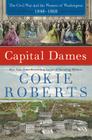
Cokie Roberts on women's history, the Civil War, and "heavy old toads"

All of us who listen to NPR grow to be familiar with the voices of the anchors and journalists whom we hear regularly, but perhaps none is as well-known as that of Cokie Roberts. She is also no stranger to audiences of ABC News, where she has been broadcasting for more than 25 years. And, as though her career as a journalist weren't impressive enough, she is also an accomplished author, having written, among other things, two books of the history of women in the late 18th century, Founding Mothers and Ladies of Liberty. Now she's written a new work about the women of Washington D.C. during the years before and during the Civil War, called Capital Dames: The Civil War and the Women of Washington, 1848-1868. We're absolutely thrilled that she's coming to be coming to Porter Square Books next week, and will be doing two events with us – a tea at the Charles Hotel from 4 to 5:30, and then an evening at the Regent Theater in Arlington at 7. We hope you'll come to one or both. In preparation for the visit, PSB owner David Sandberg had a few minutes on the phone with Cokie last week, the day before publication day, to talk a little about the book.

DS: You work simultaneously as a journalist who is concerned with what's happening right now, and as a historian who's doing a very different type of research and a very different type of reporting. How do you navigate the back-and-forth?

CR: I actually don’t think it's that different. Even though I can't interview dead people, I can read their mail, which I can't do with living people. But it is the same kind of trying to know them and know what they were thinking. And for that, you read what they've written, both in letters and diaries -- and these women, a lot of them, published as well. And then the newspapers at the time -- and that is really the great serendipity of this book. I did not realize that I would have access to the same news they were reading. Now the entire New York Times archive is online, and there are a couple of excellent websites that give you newspapers from the early 19th century on. And the whole newspaper, where you see the ads and all of that, which are so interesting and so much fun. So I feel like in some ways it's not all that different. The one way that is different that is great is that they can't argue with you.

DS: In terms of the availability of sources: you moved 70 years further in the future with this book. Did you have a lot more available to you?

CR: Yes, absolutely yes. For two reasons: one, there just is more available from that period and as I say, also, these women did do some writing themselves. But the other reason is that because I wrote the earlier books, the university libraries and historical societies and historical homes now are acquainted with my work, and so they are very, very helpful. And digitization is the other huge thing. So it's both a difference in time that I'm researching, but also a difference in time in the time that I'm writing.

DS: So in terms of the former, do you think women made a lot of progress during those 70 years?

CR: Well, they certainly did during the war, which is the thesis of the book. But in the course of those 70 years it was kind of back and forth because the Revolutionary women were out there, and had to be, and then there was kind of this 19th century "be delicate and be at home." They were still politically interesting and interested, but the war certainly turned them into activists in a huge way.

DS: But history, though -- looking who's writing the books. I think most of the books you just mentioned, as well as yourself, Jill Lepore, Megan Marshall -- most of the people writing the history of women in this country are still women. Doris Goodwin writes about men, but most male historians don't write about women. Does that have to change also?

CR: Probably yes. Yes, I do think that has to change. There's an exception in Paul Nagel who wrote about the Adams women, but he didn't really like them.

DS: You must have contemporary historians whom you admire, or whose work you rely on. Who do you think are some of the people writing the best history today?

CR: Well, it depends on the subject, but I certainly relied on both Doris Kearns Goodwin's Team of Rivals and James McPherson's Battle Cry of Freedom for this book. This book is set in Washington and there are also two very good books that are about Washington in the Civil War, one is Ernest Furgurson's Freedom Rising and the other was the classic, which is Margaret Leech's 1941 book Reveille in Washington. But she cites no sources, which makes me crazy. Because now I know so much about it, I can figure out where most of that sourcing is, but that doesn’t do it.

DS: Part of the point of all three of the books, the history books that you've written, is that these are people who are really important to our history and yet their stories don't get told.

DS: How are we doing? How many more books have to be written before you feel that the women's stories are viewed with the same status [as those of the men]?

CR: I actually do think we're doing better. When I wrote Founding Mothers, aside from a couple of good Abigail Adams biographies, there really weren't modern, good biographies of some of these women and since then there's a good Martha Washington, an excellent Dolley Madison, a few on Elizabeth Bonaparte -- there's a lot more happening. But is there forever to go? Sure. It's just unbelievable. We've essentially said that half of the human race doesn’t count in our history. Which means we've distorted our history.

DS: And what about fiction? When you're reading for entertainment and not work.

CR: You know, it's interesting because working on this book -- I'm always late. And I was doing so much research that I didn’t really allow myself to read fiction. The only fiction I read was that fiction -- you know, Capitola and The Hidden Hand. Written by E.D.E.N. Southworth -- her name was something like Emily Danielle whatever, and her byline was E.D.E.N., each with a period after it. Of course the huge, the enormous, enormous, enormous best-selling fiction at the time was Uncle Tom’s Cabin. But, you know, once I finished and I sat down and said Oh, wow, I can actually read some fiction, how much fun, I immediately went to Ellen Gilchrist, because she had some new short stories out and I love her work.

DS: So this book is about Washington, but the last two books dealt a lot more with Boston. What's your favorite Boston story from the colonial period that we might not be familiar with?

CR: Actually, let me tell you one from this period, because I have a lot of unpublished letters of Abigail Brooks Adams -- this is Charles Francis Adams’ wife, so she would be the granddaughter-in-law of Abigail, the daughter-in-law of Louisa. And she is in Washington and he is in Congress, in that very infamous Secession Congress, the 36th Congress, before he went off to London to be the Union ambassador to the Court of St. James. And she writes these hysterically frank letters from Washington home to Henry Adams. She calls Buchanan, the president, a "heavy old toad". And she's furious with Massachusetts Senator Charles Sumner, who's her friend, but she gave him "a piece of my mind -- he expects us all to go out and show ourselves and entertain and work all the time for the cause and he did nothing, not a thing." This is my favorite: "I would advise any young woman who wishes to have an easy quiet life not to marry an Adams." And she also says "The Senate behave like children, and silly ones at that."

DS: Certainly you can tell whose grandchild-in-law she was.

CR: Yes, the strongest men in each generation did marry these very strong women.

DS: One last question -- what are you working on next?

CR: That's like asking someone who's just had triplets when she's going to have her next one. I'm not going to do more Civil War. I did not get this book in until February, so I am still suffering the after-effects of getting up at three o'clock in the morning and writing for fifteen hours straight, to make it into the stores by the end of the sesquicentennial of the war.

DS: OK, so then we'll let you go back to your day job.

CR: Thank you. There is a presidential election coming up. You might have noticed that.

DS: Good luck with the launch, and we can't wait to see you.

CR: I'm so looking forward to that.

Blog Archive