Wednesday, September 19, 2012

Interivew with Daniel Lawless editor of Plume Anthology of Poetry


The Plume Anthology of Poetry 2012 grew out of an online literary magazine and includes almost seventy poets representing a broad range of the best work by the best U.S. and international poets working today, including; Rae Armantrout, Lydia Davis, Bob Hicok, Paul Muldoon, Ron Slate, David Young and more.  (The "more" even includes a poem by our own Josh Cook.) The anthology is edited by Daniel Lawless. Lawless received his B.A. from Bellarmine University and his M.A. in English and Creative Writing from the University of Louisville. After stints in France and England, he is currently a Professor of English at St. Petersburg College. He will be appearing along with contributors Rafael Campo, Martha Collins, D. Nurkse, and Daniel Tobin at Porter Square Books on Monday Oct 29th at 7pm. Below is an interview with Lawless.

Why did you start an online poetry journal?

Something of a whim. I’d advised a former student who was contemplating the same thing to do so, and then, a bit later, took my own advice. I suppose there was an element of…on the most minor, vanishingly small scale imaginable…something like what real philanthropists must feel: I have this stuff, and I don’t really need it, so what do I do with it? In this case, the stuff is a lifetime of reading, which aside from long-winded, not-so-subtly competitive discussions with a few like-minded friends (I’d long ago used up its pheronomic properties) was and had been for many years, effectively out of service. The answer became clear after my student’s experience, which was quite successful, and, as a chronic, massive under-achiever, what did I have to lose? The financial costs were minimal, I soon learned, and my time, after teaching, was my own and thus my billable hours were extremely reasonable, let’s say.

From the first issue on, Plume has published some of the biggest names in contemporary poetry, Rae Armantrout, Andrei Codrescu, Lydia Davis, Paul Muldoon, and more. How were you able to attract so many great contributors, so quickly?

Here I invoke the anti-jinx clause. Which is to say, I don’t want to think about it too much, as if I do, it – this inexplicable luck -- may disappear.  I wrote to them, and they sent me poems. Although I will say, I think a perusal of the Mission Statement, which is somewhat mirrored in my request letters, offers a clue. The names of the poets I admire most feature prominently in both, and my guess is that the poets recognized those names as a sort of “secret handshake”: Trakl, Cioran, Montale, Aragon, Parra, Cassian, Follain, and the rest signaled that this was my experience, and that the poet from whom I was requesting work admired them too, and an implicit pact was formed. After all, these poets are not so much taught today as they once were, unfortunately, and it was up to them (and in a tiny way me) to continue this tradition, as it were. A kind of challenge, perhaps, and one I am very pleased our contributors have met. (Or, I could be altogether out of bounds, and this wasn’t the reason at all. In that case, I have no idea whatsoever why they chose to send us their work.)

What do you look for in a poem, both as a reader and as an editor?

The easiest thing to say is a certain mastery of craft, of meticulousness, and then a sense of surprise, of the uncanny, as I have said before, I think. I’m not a fan of wasted words – the poems that dilly-dally - ! – around until they reach a killer last line: every word counts. I understand the need for build-up, I do, but within that “leading to” there should be the same beauty, the same dedication to diction and syntax, the sense of urgency, so that the final image, as is too often the case, is not so obviously the best thing about the piece, its reason for being.

Why did you decide to publish a physical poetry anthology?

As Ron Slate noted in his elegant Forward, it has to do with the permanence of print, its old-school appeal to the senses, as has been remarked upon elsewhere, many times, I am sure.. The memories I drag around of certain books, their covers and the aromas of their pages, the texture of the paper – clearly these are not available in digital form.  A generational thing, perhaps.

What was the process, both in terms of the logistics and your mindset, of going from monthly online journal to print anthology?

I am a tyro. That is immediately of note, isn’t it?  I had to learn almost everything. Fortunately, in Jason Cook and Chris Katz, publisher and designer respectively, I had two wonderful tutors. With this first anthology, since we’re so new, it was necessary to draw extensively from the online work, adding here and there as we could new work and, of course, the “Feature Poet” section – M. Vasalis, the great Dutch poet, introduced and translated by another great poet, David Young. The second anthology will be different.  We are making a conscious effort to separate the two formats: work that appears online will not appear nearly as much in print. As we get submissions, I make this a point of emphasis (sounding a little NFL referee-ish….), asking for at least two pieces, one for an online issue and one for the print anthology.

Why is poetry important? What is its value to our society/culture/world?

I refer you to Mr. Parini’s Why PoetryMatters. (One of his poems, by the way, will appear soon in Plume.) Its value, for me, as I have said in the past, lies in, above all, its beauty: it is an object, like any other art object, and there are many other opinions as to what art can and should do, of course, but for me, edification is not its chief purpose, nor is escape or revelation, really. Having said this, all of these are in play in the poem, and contribute to its beauty, surely. But, if I finish a poem with a silent admiring “Damn!” or gratitude, or, let’s be honest, envy – the poem has done its job. Except, of course, poetry has no job.


Is there a poem or a poet who opened your eyes to poetry? What were some of your early experiences with poetry?

So many. I fell into the hands of the Surrealists early on, at fifteen or so, and the purity of the images just laid me out: Péret, especially, and Desnos, and Reverdy – I toted around Michael Benedikt’s indispensable The Poetry of Surrealism for years, and a bit later his The Prose Poem: An International Anthology. Then Cioran: a different kind of poetry, and Barthes, yet another. The quiet of Follain was a tantalizing mystery : he is the master of the unsayable. I still haven’t figured out how he does it. Some of the early Bly, too – Silence in theSnowy Fields. Stevens, Ponge, Michaux, Edson, Simic…each had an influence. My Master’s thesis was a book of poems called The Old Ones and Other Poems; take a look at Follain’s Canisy or Transparence of the World, or Ponge’s Le parti pris des choses and, well, I don’t think the debt is likely to be overlooked.

What’s next for American poetry or poetry in general?  Where do we go from here?

However one answers these questions, one must imagine oneself fifty years in the future.  What is certain is that a measure of…quaintness is inevitable, that seems impossible now.  Still, what is one to do? Stop writing, because in 2060 most of our work will seem too much of its time? That is not an option, is it? One works without a thought for posterity, it’s the only way: work written for posterity is often precisely that which is most ephemeral. But, to answer your questions: I don’t know. Nor do I care, really.

What are you reading?

Aside from contemporary poetry, I am trying to fill in the gaps of Marcel Bénabou’s work --  Why I Have Not WrittenAny of My Books and To Write on Tamara? are extraordinary – and that of Alberto Manguel, whose The Library at Night was equally wonderful. I have just taken up Edouard Levé’s Autoportrait, after falling hard for his Suicide. Another one I have recently finished is Ennemis Publics, a book of correspondences between Michel Houllebecq and Bernard-Henri Lévy. And I go back again and again to Artaud – le théâtre et son double – and Genet, and, of course, Cioran – although I have almost all of it scattered about, I got his Œuvres a couple of years ago in Paris: a real doorstop.  Bolaño I like a lot, and I admired and had fun with Padgett Powell’s The Interrogative Mood. Coetzee, Merton, Kenzaburō  Ōe, Bataille,  Julian Barnes’ The Sense of an Ending. Oh, and Nooteboom’s Self Porttrait of an Other, is quite something, though I suppose it counts as prose poetry. And Emmanuel Hocquard.

Monday, September 17, 2012

PSB in Wonderdads

We are in a book!  

All Mo Willems jokes aside, Wonderdads recently called us one of the best dad and child activities in Boston:  "This bookstore has a fantastic children's section with an area for kids to play or read.  For young kids, there is a story hour every Wednesday at 11 a.m.  For older kids (ages 9-12), they even have a book club!"
Our Fresh Ink Program also includes teens and young adults.  See what they're reading on the Fresh Ink Blog.


Kim Prosise

Friday, September 14, 2012

Coming to the Big Screen This Fall!

You read the book- or maybe you didn't, but you will- and now it's going to hit the big screen. What's that? Only about a dozen or so major literary adaptations are set to open in theaters starting this week with The Perks of Being a Wallflower, Stephen Chbosky's young adult novel now a movie starring Logan Lerman and Emma Watson.

Check out what else is coming up, and get the book before they open:

Sept 16 - The Perks of Being a Wallflower, based on the novel by Stephen Chbosky
Oct. 5 - The Paperboy, based on the book by Pete Dexter
Oct. 5 - Wuthering Heights, book by Emily Bronte
Oct. 12 - Atlas Shrugged, book by Ayn Rand
Oct. 19 - Alex Cross, based on several novels by James Patterson
Oct. 26 - Cloud Atlas, book by David Mitchell
Nov. 9 - Lincoln, based on Team of Rivals by Doris Kearns Goodwin
Nov. 16 - Anna Karenina, book by Leo Tolstoy
Nov. 19 - Twilight Saga: Breaking Dawn (Part III), book by Stephanie Meyer
Nov. 21 - Silver Linings Playbook, book by Matthew Quick
Nov. 21 - Life of Pi, Booker-Prize-winning book by Yann Martel
Dec. 14 - The Hobbit, book by J.R.R. Tolkien
Dec. 14 - Les Miserables, book by Victor Hugo
Dec. 21 - On the Road, book by Jack Kerouac 


Don't forget to check out our display for The Hobbit just as you enter the store, and let us know if you need help finding these books or anything else!

Wednesday, September 12, 2012

Sit. Stay. Read! 2013

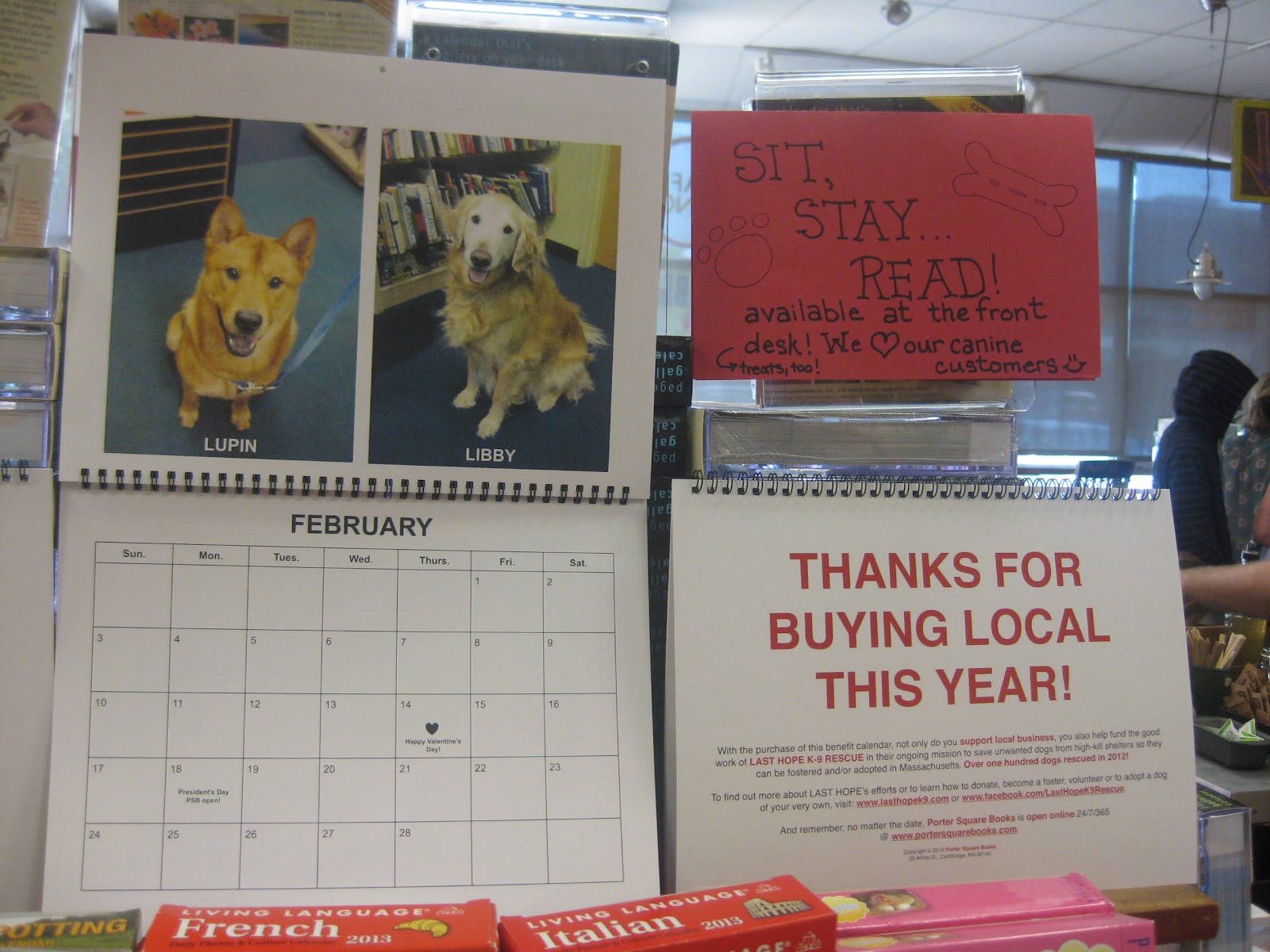
The Sit. Stay. Read. Calendar is here!   

We'd like to extend a huge thank you to everyone who came out to the shoot and helped us fill 2013 with cute, cuddly, canines!


The calendar is $15 at the front desk, and proceeds go to Last Hope K-9 Rescue, an organization that saves unwanted dogs from high-kill shelters so they can be fostered or adopted in Massachusetts.  Last Hope rescued over a hundred dogs in 2012!  To find out more, volunteer, or adopt a dog of your own, visit www.lasthopek9.com or www.facebook.com/LastHopeK9Rescue.

Get your copy of the calendar here.

Kim Prosise

Tuesday, September 4, 2012

Boston Books for Kids

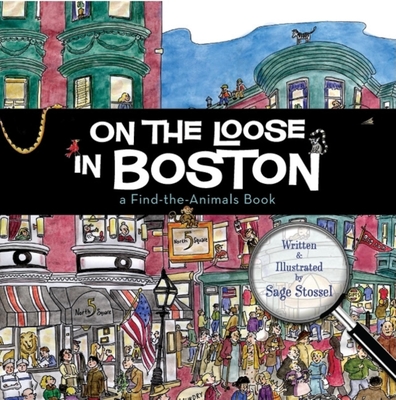
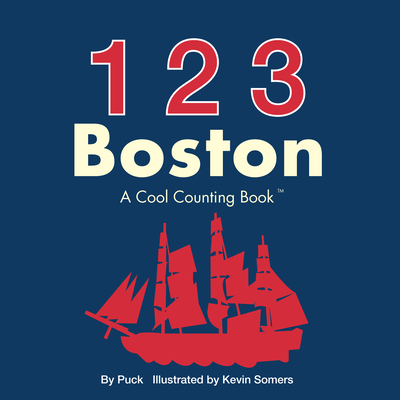
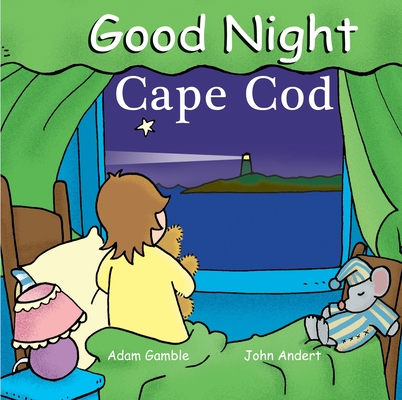
Our customers are always looking for children's books about Boston.  Here's a short list of our bestsellers:

On the Loose in Boston, by Sage Stossel 

 123 Boston: A Cool Counting Book, written by Puck, illustrated by Kevin Somers
  
Good Night Boston and Good Night Cape Cod, by Adam Gamble and John Andert


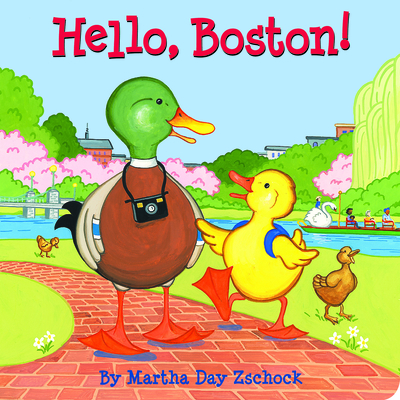
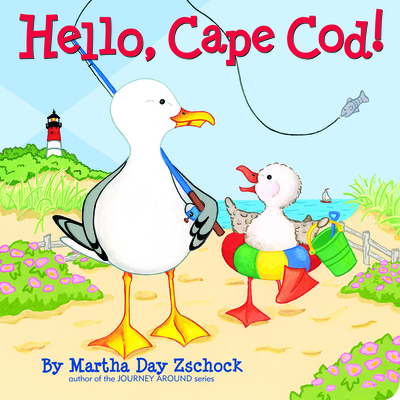
Hello, Boston! and Hello, Cape Cod! by Martha Day Zschock


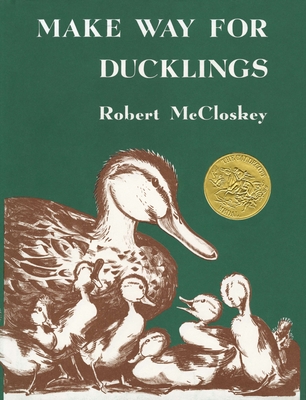
Make Way for Ducklings!  by Robert McCloskey


Don't see your favorite?  Post it to the comments or Tweet at us, @PorterSqBooks!

Kim Prosise

Thursday, August 30, 2012

Read Local, Drink Local Event Series


This fall, we’re trying a new event series. The Read Local, Drink Local Series, will “pair,” a beer tasting from a local brewery with a book about beer. Why are we doing this you might ask? Shopping local is more than about books, it’s about every part of our community; food, clothes, art, books, banks, and, of course beer. We saw this event series as a bookish way to connect with other members of our community. And, let’s be honest, the Cambridge/Somerville area has some of the best breweries in the country. Who wouldn’t want an excuse to sample their wares?

Our first Read Local, Drink Local event is at 7pm on Friday September 14, with Slumbrew and Norman Miller, author of the paired book Beer Lover’s Guide to New England.

Slumbrew is the research & development brand and concept of Somerville Brewing Company. Their mission is to brew unique, ingredient-driven beers that challenge common notions of what a beer should taste like. It is the result of nearly 15 years of beer travel and research by Caitlin Jewell and Jeff Leiter; and a decade of Jeff’s homebrewing recipe formulation. Norman Miller is the author of Beer Lover’s Guide to New England: Best Breweries, Brewpubs, & Beer Bars. He grew up in the beer wasteland of Leominster, Massachusetts, where he still resides with his dog, Fox, and his beer fridge, Beatrice. He writes the popular Beer Nut column that appears weekly in the MetroWest Daily News and the Beer Nut blog on wickedlocal.com.

And if you like what you taste, Liquor World is right in the shopping center.

Tasting is free with the purchase of the featured book. I suppose, if you don't want to buy the book, you could just stand there and listen to the presentation while everyone else samples delicious, delicious beer, but that doesn't sound like much fun to me. And, of course, you must be 21.

Click here to order Beer Lover’s Guide to New England. (You can also buy it in the store.)

The next two events in the series are on October 26 with Pretty Things, featuring the book Brewed Awakening (we’re still working on getting the author here) and on November 9 with Cambridge Brewing Company and John Holl author ofMassachusetts Breweries.

This is the first time we’ve tried an event like this so we’re interested in what you think about it. Comment on the post if you have questions, comments, concerns.

Wednesday, August 22, 2012

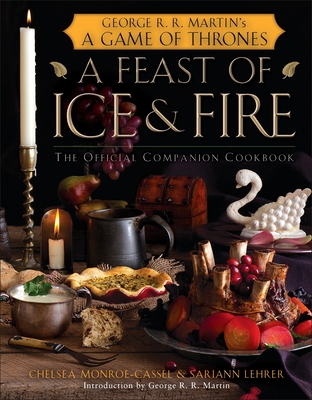
A Feast of Ice and Fire: Honey Biscuits

For those of you who haven't heard, A Song of Ice and Fire now has an official cookbook!  Chelsea Monroe-Cassel and Sariann Lehrer have gone through the trouble to put it together, and George R.R. Martin has applauded their Herculean effort (apparently Martin writes about food nearly as much as Brad Pitt eats it) by writing them a forward in which he fesses up to scarfing down a good number of their creations.


Not only is the book great for fans of the series (there's no longer any excuse for Doritos at that Game of Thrones viewing party), it's also a really fun cookbook in its own right. Whether it's a savory stew of cod, crab, and winter vegetables called Sister's Stew, poached pears, wintercakes, or sweet pumpkin soup, cooks are bound to find something new in A Feast of Ice and Fire.

Before each recipe, the authors thoughtfully include a passage in which the dish is mentioned.  I wish they'd also included page numbers, but that's just about the only thing I'd change about this beautiful cookbook, which is artfully formatted and full of gorgeous color photographs.  One of the coolest things about it is that it features two recipes for each dish: one medieval and one modern.  The medieval recipes are prepared with only the ingredients and technologies that are available to cooks in the novels, while the modern recipes take some creative license.

In preparation for Chelsea and Sariann's PSB appearance tomorrow, August 23rd, I thought I'd cook up some of their honey biscuits (pages 114-116):


For the sweet, Lord Caswell's servants brought down trays of pastries from his castle kitchens, cream swans and spun-sugar unicorns, lemon cakes in the shape of roses, spiced honey biscuits and blackberry tarts, apple crisps and wheels of buttery cheese.  --A Clash of Kings

Medieval Honey Biscuits
Makes about 20 biscuits - Prep: 10 minutes - Frying: 20 minutes
Pairs well with any pie, Bean-and-Bacon Soup (page 31), hot beverages

2 cups flour
1 tsp salt
5 Tbsp unsalted butter
Cold water
Olive oil or unsalted butter
1/4 cup honey
1 Tbsp ground cinnamon

Mix together the flour and salt.  Using your fingers, rub the butter into the flour until the dough has the texture of coarse bread crumbs.  Gradually stir in just enough cold water that the dough sticks together.  Be careful not to overwork it or add too much water.
Roll out the pastry to 1/4-inch thickness and cut it into circles about 2 inches across.
Fry the pastry in a pan coated with a little olive oil or butter over medium heat, until lightly brown and crisp, being careful not to burn the pastry.  This should take about 3 minutes.  Drain well on paper towels.  Meanwhile, place the honey in a sauce-pan and slowly bring it to a boil.  Brush the pastries with the hot honey, sprinkle them with cinnamon, and serve hot.
*The authors note that in place of making dough, you can also use the leftovers from any of their pie recipes


Modern Honey Biscuits
Makes 16 biscuits - Prep: 10 minutes - Baking: 15 minutes
Pairs well with Beef and Bacon Pie (page 71), Sister's Stew (page 90), Iced Milk with Honey (page 169)

2 cups flour
1 Tbsp baking powder
1 tsp baking soda
1 tsp salt
1 Tbsp pumpkin pie spice or mixed spice
1/2 cup granulated sugar
2 tsp ground ginger
1/2 cup (1 stick) unsalted butter, chilled and cubed
1/2 cup honey
1 cup raw sugar for decorating

Preheat the oven to 300 degrees F.  Either line two baking sheets with parchment paper or plan to bake in two batches.
In a bowl, combine the flour, baking powder, baking soda, salt, spices, granulated sugar, and ginger.  Using your fingers, rub the butter into the flour until the mixture resembles fine bread crumbs.  Heat the honey in a small saucepan over medium heat until it is warm and runny (or microwave it for 1 minute).  Add the honey to the flour mixture and work with a wooden spoon or spatula until a soft dough forms.  
Pour the raw sugar into a bowl.  Roll the dough into 2-inch balls and coat them with raw sugar.  Place eight balls onto each prepared baking sheet, without flattening them; leave room around the sides for spreading.  Bake for 12 to 15 minutes, or until the tops of the biscuits are just cracked.  Let them stand on the backing sheets for 10 minutes before transferring them to a wire rack to cool.
Eat the biscuits right away or store them in an airtight container for up to a week.

Recipes reprinted with permission from the authors.

Check out Inn at the Crossroads, for more recipes, events, photos, and the latest from Chelsea and Sariann.
PSB Event: August 23rd, 7pm.

Kim Prosise

Blog Archive